
Optimizer rune builds in Summoners War https://runeoptimizer.inigovalentin.com
 Iñigo Valentin
de30ce1d48
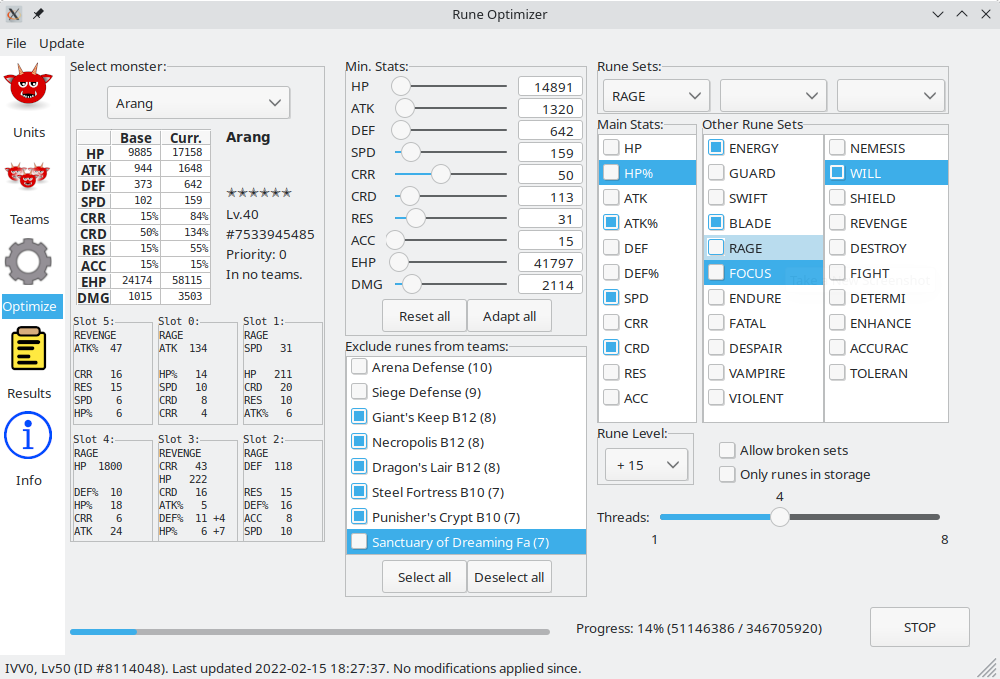
Optional and broken sets options in the GUI.
Iñigo Valentin
de30ce1d48
Optional and broken sets options in the GUI.
|
4 tahun lalu | |
|---|---|---|
| RuneOptimizerGUI | 4 tahun lalu | |
| src | 4 tahun lalu | |
| .gitignore | 4 tahun lalu | |
| LICENSE | 4 tahun lalu | |
| Makefile | 4 tahun lalu | |
| README.md | 4 tahun lalu | |
| doxygen.conf | 4 tahun lalu |
README.md
RuneOptimizer
A rune optimizer for Summoners War players
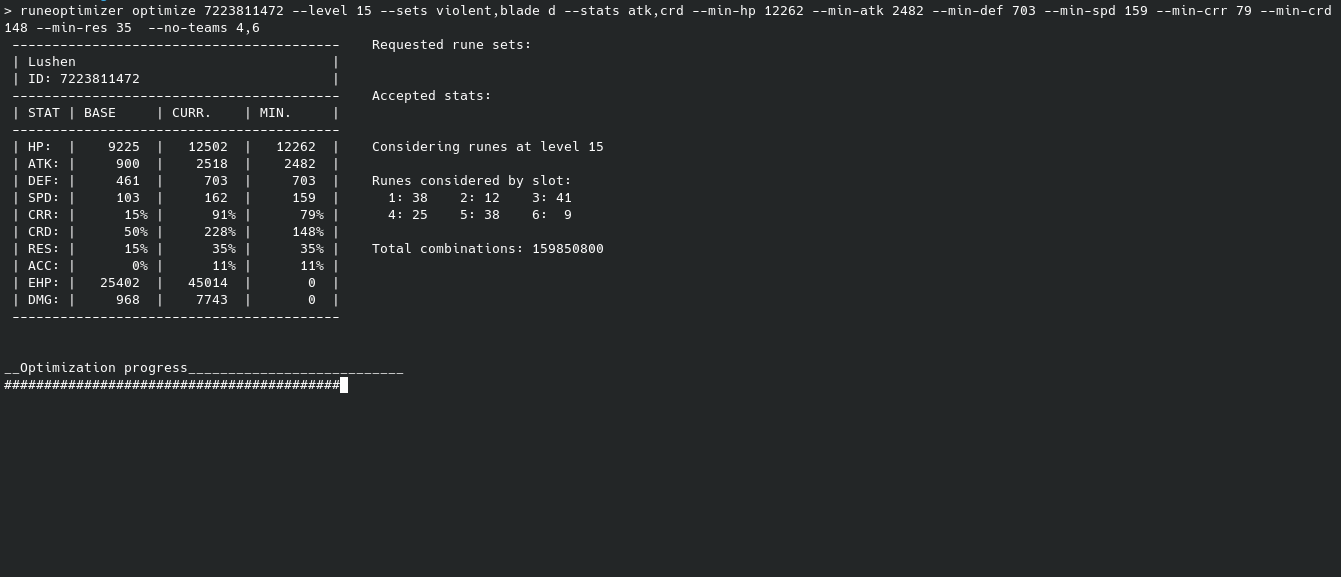
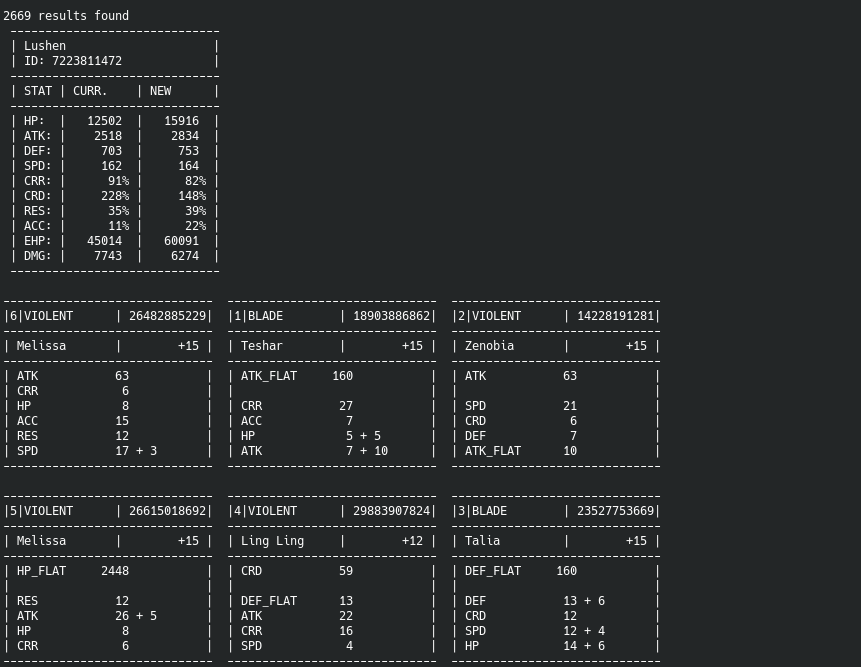
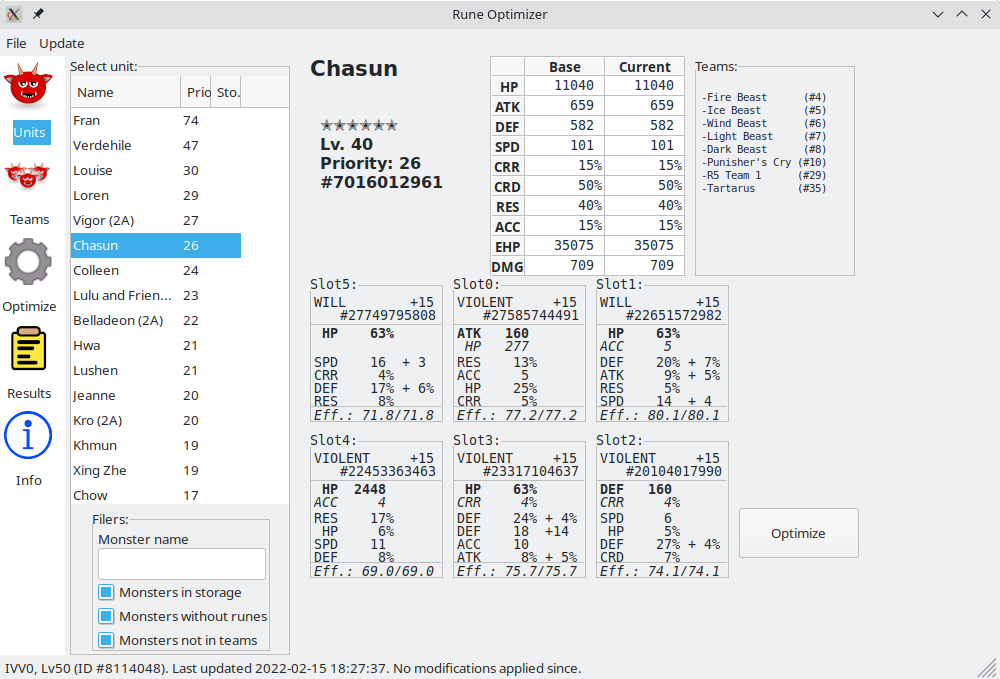
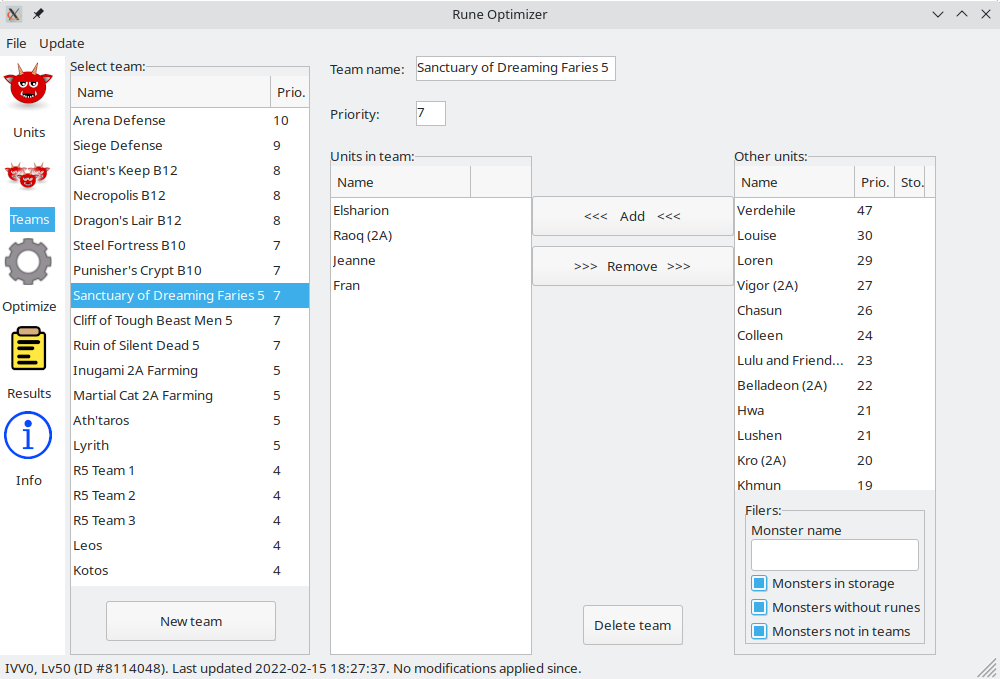
Features
- Blazingly fast
- Low memory consumption
How to use
Using the CLI
Using the command line interface can be a bit overwhelming, but it's very powerfull.
The first thing you need to do is load the data from your json
RuneOptimizer update path-to-your-file.json --six-stars --with-runes
The parameters --six-stars and --with-runes are optional, and they are used to import only monsters at level 40 or with runes equiped.
Build
Build on GNU/Linux
apt install gcc libsqlite3-dev libjson-c-dev
Just make
Build on Windows
Well, this was painfull to get right
Install MinGW for the compiler. You can follow this great tutorial: https://dev.to/gamegods3/how-to-install-gcc-in-windows-10-the-easier-way-422j
Get the sqlite3 libraries. (Credit for this part and many thanks to http://source.online.free.fr/Windows_HowToCompileSQLite) Download https://www.sqlite.org/2022/sqlite-amalgamation-3370200.zip . It contains four files:
- shell.c
- sqlite3.c
- sqlite3.h
- sqlite3ext.h
They need to be copied to the compiler lib directory
C:\MinGW\lib\Next, download https://www.sqlite.org/2022/sqlite-dll-win64-x64-3370200.zip (or https://www.sqlite.org/2022/sqlite-dll-win32-x86-3370200.zip for 32 bit versions of Windows). Extract the zip, and copy the file to these to directories:
- The compiler lib directory
C:\MinGW\lib\ - The system lib directory
C:\Windows\SysWOW64\(orC:\Windows\System32\for 32bit versions of Windows)
Build json-c. For this step you need VisualStudio. You can download it from here https://visualstudio.microsoft.com/downloads/ If VisualStudio is not installed in english by default, once it's done you will also need to install the english language pack. Once i'ts installed, follow the excelent instructions in: https://github.com/json-c/json-c#building-on-unix-and-windows-with-vcpkg- When done, you will end up with a folder named
vcpkg\packages\json-c_x86-windowsFrom there, you need to copy:- The file
lib\json-c.libtoC:\MinGW\lib - The folder
include\json-c\toC:\MinGW\lib\json-c\ - The file
bin\json-c.dlltoC:\Windows\SysWOW64\(orC:\Windows\System32\for 32bit versions of Windows)
- The file
Compile. Open a console and go to the project directory. From there, go to
src/RuneOptimizerTo compile, use the command:gcc RuneOptimizer.c -o ../../RuneOptmizer.exe -I C:\MinGW\lib -lsqlite3 -ljson-cNow, you'll have an executable in the project main directory.
(Optional) Install python to use the GUI. If you want to use the program GUI, download and install Python3 for Windows from here (required minimum version is 3.6): Download https://bootstrap.pypa.io/get-pip.py and save in the same directory that the Python executable (in my case
C:\Python32) During instalation, make sure to checkInstall PIPIn a console, runpy -m pip install wxPythonto install the required packages.